
Coaches Now Program More Pulling Than Pushing
Monday is still chest day in most gyms. In premium coaching programs it isn't. The row reaches nearly two in three clients, the bench press about one in three, and we think the coaches have it right.
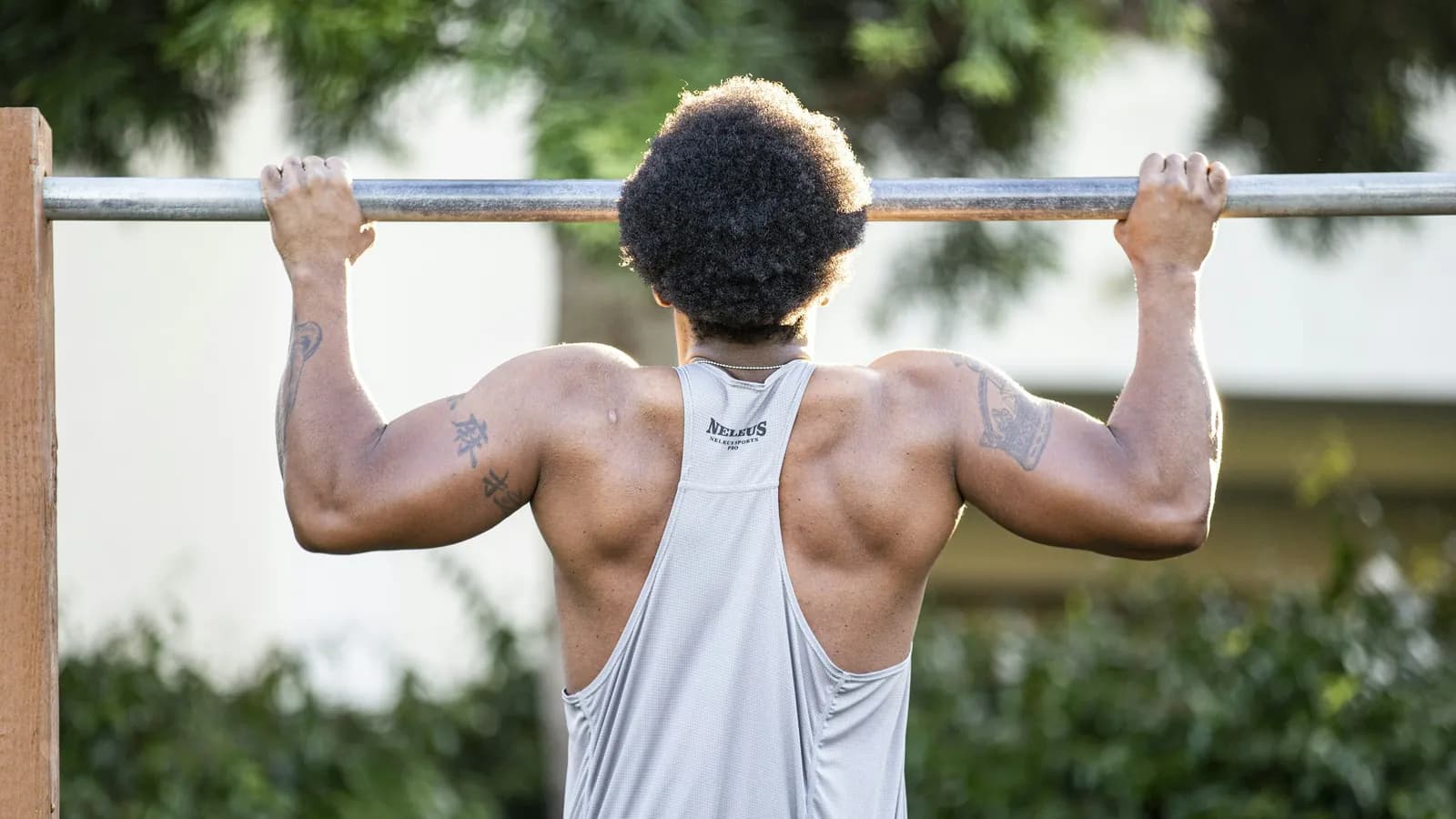
Photo by Lawrence Crayton on Unsplash
Walk into most commercial gyms on a Monday and the benches are full. Should you do more pulling than pushing? Gym culture says no. The people who write programs for a living have quietly decided otherwise. In October 2026, a row of some kind went into nearly two in three client programs on FitFocus. The bench press went into about one in three.
This is an opinion piece, built on a month of platform data. We think the coaches are right, and we also think the usual reason given for it is the weakest one.
Should you do more pulling than pushing?
For most clients, yes, or at least as much. Premium coaches on FitFocus already do it: in October 2026 pulling made up 18.8% of exercise prescriptions against 17.3% for pushing, and the row reached 64% of clients while the bench press reached 36%. Matching pressing with at least as much pulling is a sound default.
| Pulling movement | Share of clients | Pushing movement | Share of clients |
|---|---|---|---|
| Row (all variations) | 64% | Bench press | 36% |
| Lat pulldown | 51% | Shoulder press | 27% |
| Face pull | 19% | Overhead press | 19% |
| Pull-up | 17% | Incline bench press | 17% |
| Rear delt fly | 13% | Push-up | 17% |
| Chin-up | 9% | Pec fly | 11% |
The top of the table is where the difference lives. The two most widely programmed movements on the whole platform are both pulls, and the most common press sits well below either of them. The full ranking for the month is in our report on what coaches programmed in October 2026.
An honest caveat about the volume numbers
The pattern totals flatter the pull side a little. Weightlifting derivatives such as clean pulls, snatch pulls and panda pulls count as pulling, and they come mostly from weightlifting-focused programs. Take out the derivatives we can identify and the two patterns sit roughly level on volume.
So the strong claim is about reach, not volume. Pulling is spread across far more client programs than pressing is. A typical client on the platform is more likely to row this month than to bench, and that is the finding worth arguing about.
Why we think the pull bias is right
The reason you usually hear is posture: everyone sits hunched over a laptop, so pull more to fix it. We would not lean on that. A few sets of rows a week is a small dose against eight hours at a desk, and we are not convinced it changes how anyone sits. There are better reasons.
The shoulder is where lifters get hurt
A review of shoulder injuries in resistance training by Kolber and colleagues found the shoulder complex accounts for up to 36% of documented training-related injuries, and listed muscle imbalance among the risk factors. That does not prove more rowing prevents injury. It does mean the joint that pressing loads hardest is also the one most likely to complain, and giving the muscles behind it at least equal work is cheap insurance.
Rows are easy to load and hard to get wrong
A chest-supported row or a cable row can be taught in a session, loaded progressively for years and adapted for almost any client. That makes it the ideal default for a coach writing programs for people they rarely see lift in person. The bench press, by contrast, needs a spotter or a safety setup to push hard, and it is a bigger technical ask for a beginner.
The mirror undertrains the back
Clients ask for chest and arms because they can see them. Coaches who program the face pull for nearly one in five clients and the rear delt fly for one in eight are correcting for that. It is the same balancing instinct we described in the exercises that travel together, where nearly every practice that programs a row also programs a press.
Where we would push back
Two things in the data bother us.
The first is the pull-up. The lat pulldown reaches half the roster; the pull-up reaches about one in six, and the chin-up fewer than one in ten. Machines are easier to program remotely, and pulldowns are a fine way to build to a pull-up. But a pull-up is one of the few strength tests a client can take anywhere for the rest of their life. More programs should be heading towards one, with the pulldown as the route rather than the destination.
The second is ratio thinking. You will read that pulling should outnumber pushing two to one. We could not find good evidence for a specific ratio, and the platform data does not suggest coaches follow one either. Balance is the principle. A precise number is false confidence.
What to check in your own programs
- Count the clients, not the sets. Do most of your clients have at least one row and one vertical pull in their week? On the platform, most do.
- Look at the rear of the shoulder. Face pulls and rear delt work are cheap, quick and easy to fit at the end of a session.
- Give the pull-up a pathway. If a client can do a pulldown, there is usually a progression towards a pull-up they could be on.
This is easier to keep consistent across a team when the balance lives in the template rather than in each coach's habits. Shared templates in a program builder mean every client starts from a balanced week. For the wider picture of which patterns hold steady across every kind of coaching, see the movements every coach programs.
Common questions about pulling and pushing
What is a good push to pull ratio?
There is no well-supported exact ratio. A practical default is at least as much pulling as pushing, across both horizontal (rows, presses) and vertical (pulldowns, overhead presses) planes. Premium coaches on FitFocus programmed slightly more pulling than pushing in October 2026, and spread it across far more client programs.
Are rows better than the bench press?
Neither is better. They train opposite sides of the upper body and work best together. Rows are easier to teach and load safely without a spotter, which is one reason coaches program them more widely: in October 2026 rows reached 64% of clients on FitFocus and the bench press 36%.
Do face pulls help shoulder health?
They train the rear deltoids and the muscles around the shoulder blade, which pressing works least. There is no proof they prevent injury on their own, but they are a low-cost way to balance a press-heavy program, and premium coaches programmed them for nearly one in five clients in October 2026.
Methodology
This piece uses exercise prescriptions written into client programs on the FitFocus coaching platform during October 2026. Exercise names were grouped into canonical movements, and each movement was assigned a pattern (pull, push, hinge, squat and so on). Client reach is the share of clients with at least one prescription of the movement in the month. Weightlifting derivatives were identified from the movement name and notes. The figures are observational and are not a training or injury-prevention prescription. No client-identifying information is included. On shoulder injuries we drew on Kolber and colleagues (2010).
FitFocus gives coaching teams shared templates and one exercise library, so programming balance is a team standard rather than a personal habit. Book a 30-minute demo to see how it works.

Written by
FitFocus team
FitFocus writes about coaching software, pricing, and the business of running a premium coaching practice. FitFocus is part of the Hale Health ecosystem.
Keep reading
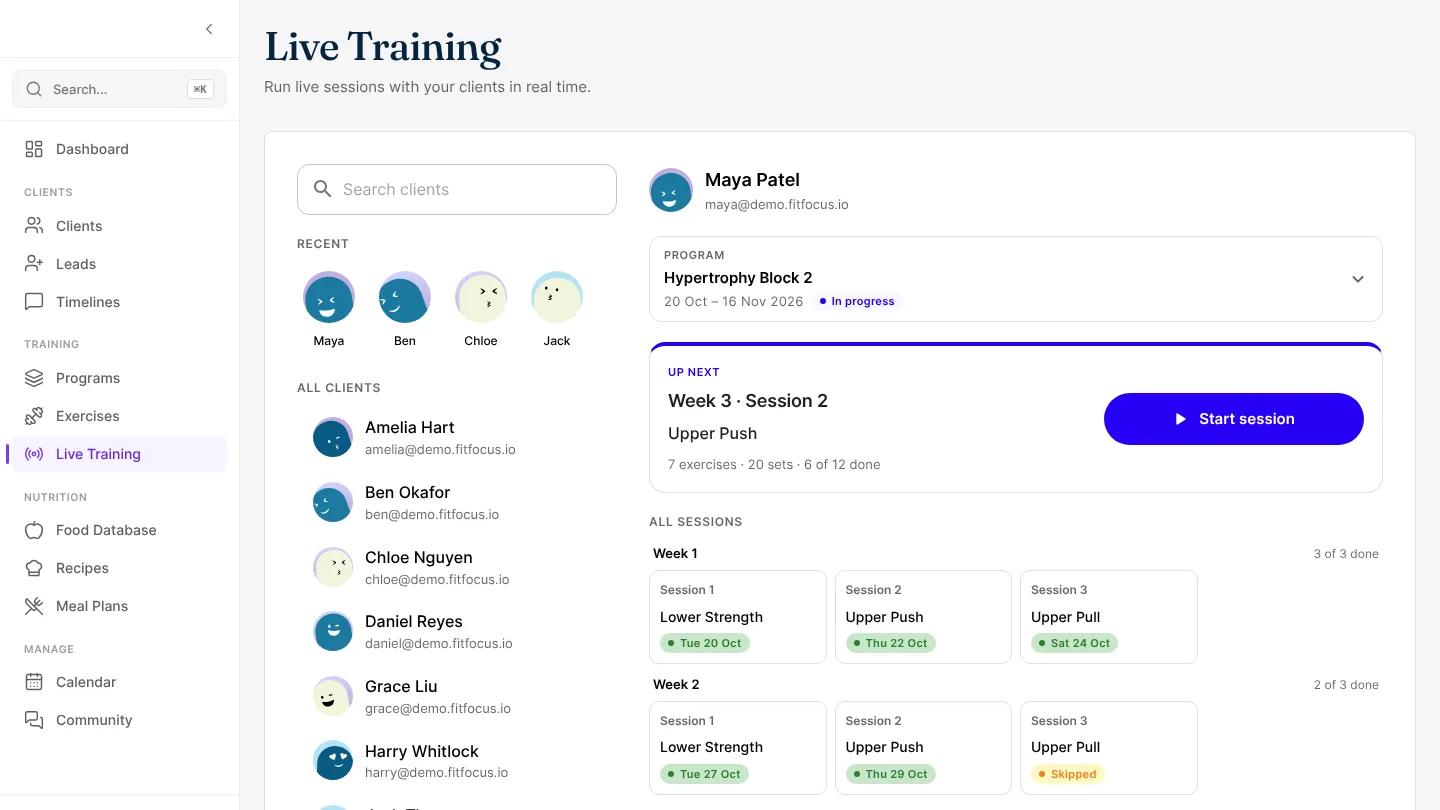
Live Training opens your client's next session
Pick your client in Live Training and their next session is ready to start. No more choosing the program and session from lists.
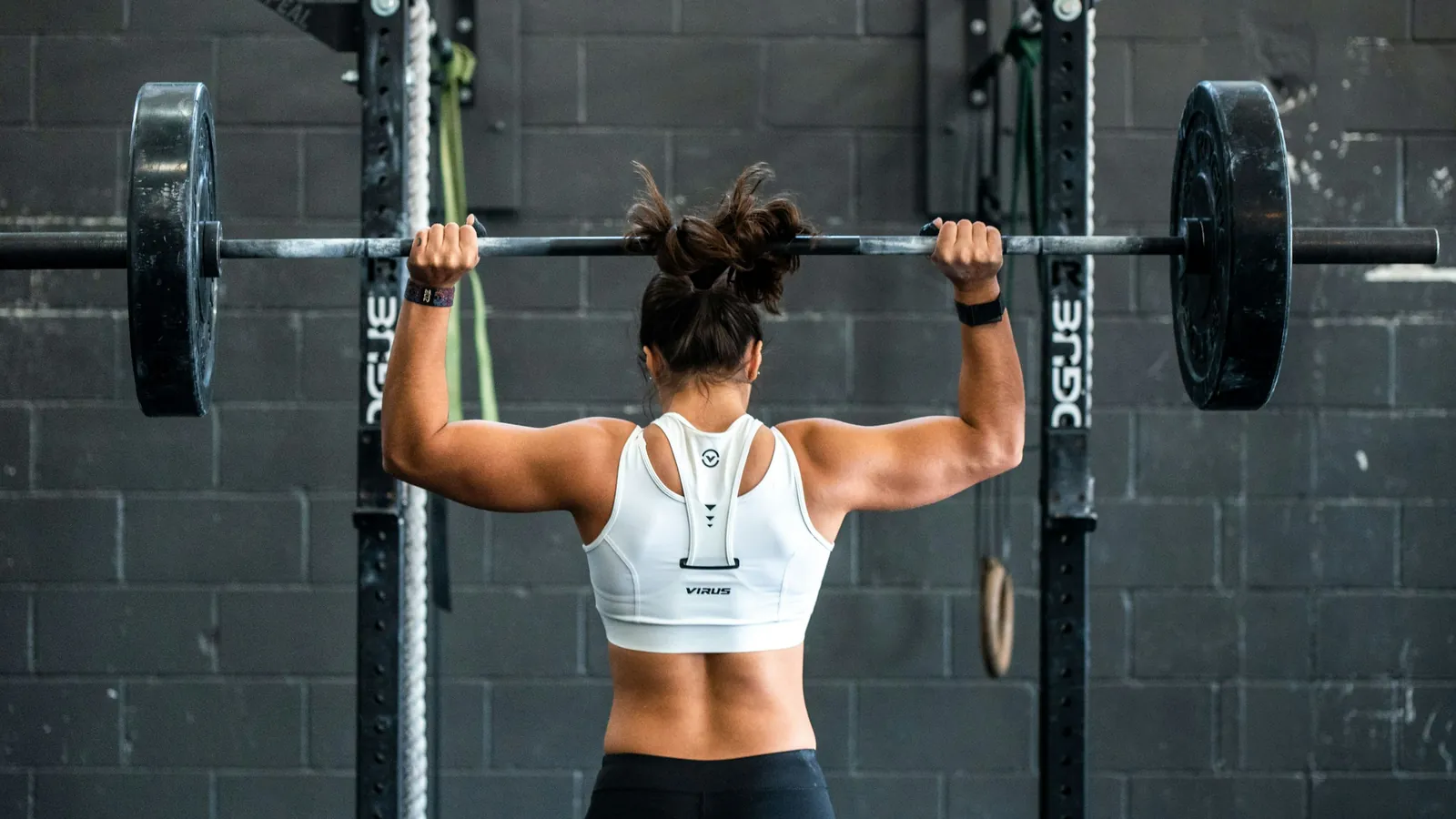
How Many Sets Per Exercise Do Coaches Program?
Three sets of ten is the gym default. Across every set premium coaches prescribed on FitFocus in October 2026, the average was closer to two and a half per exercise, and the reason is weekly volume.

What Coaches Programmed in October 2026
A month of programming on FitFocus, read as data. Rows reach nearly two in three clients, machines and cables carry the volume, and one movement pattern barely registers.