
Coaches Barely Program Loaded Carries. That's a Mistake.
Pick up something heavy and walk. It is one of the oldest training ideas there is, and in October 2026 it made up half of one per cent of everything premium coaches programmed on FitFocus. We think that is a mistake.
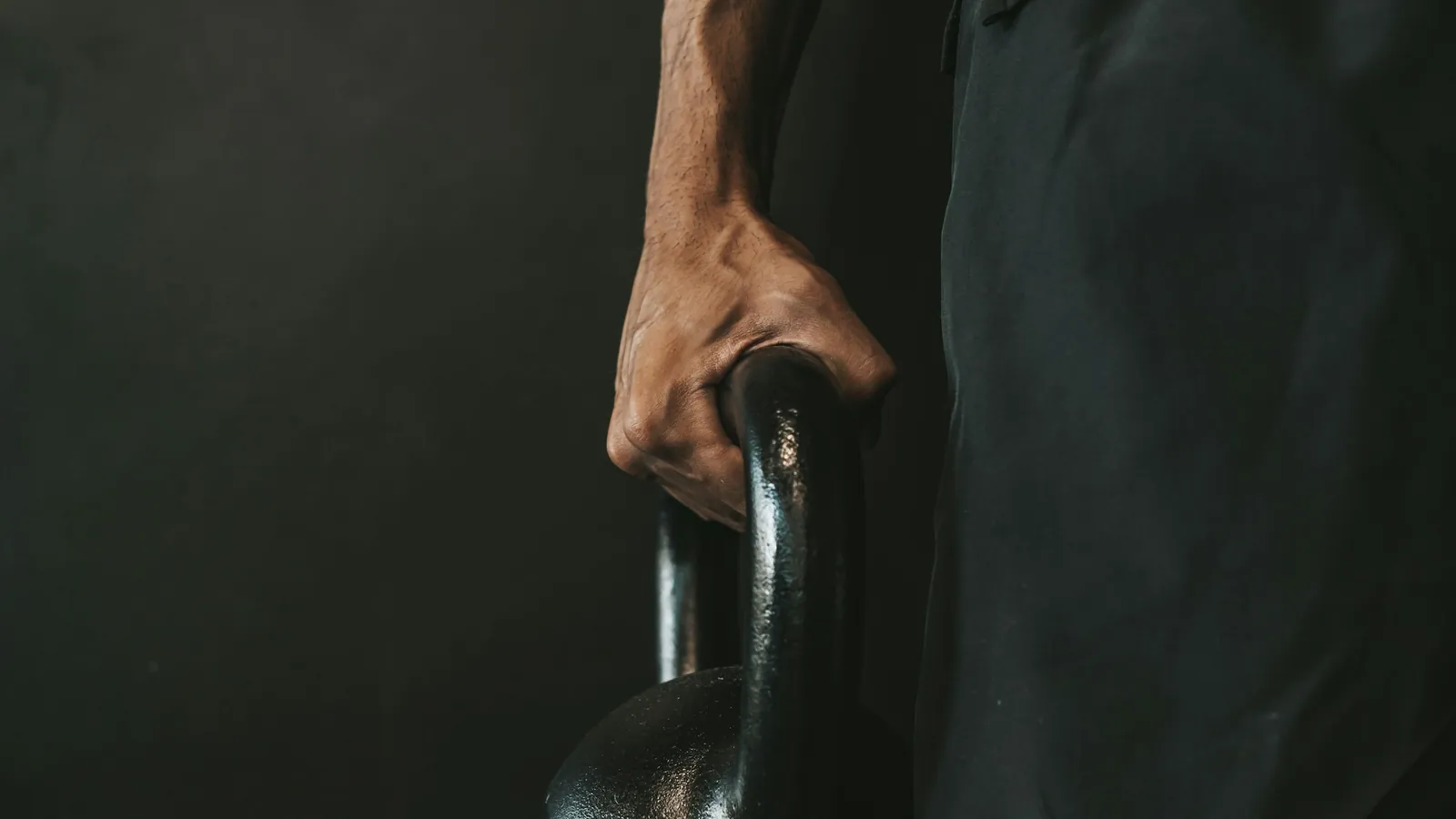
Photo by Farkas Mario on Unsplash
Pick up something heavy and walk. It is about the oldest training idea there is, and it shows up in nearly every strength coach's list of fundamentals. It barely shows up in their programs. In October 2026, loaded carries made up 0.5% of all exercise prescriptions on FitFocus, the smallest movement pattern by a long way.
This is an opinion piece. We think coaches should program loaded carries far more than they do, and that the reasons they don't are mostly practical rather than principled.
Why should coaches program loaded carries?
Because carries train things almost nothing else in a program does: grip, a stiff trunk under uneven load, and walking while holding weight, which is what daily life actually asks for. They need little equipment and little skill. Yet in October 2026 they were just 0.5% of what premium coaches on FitFocus programmed.
How rare carries really are
Every other movement pattern reached at least 3.9% of prescriptions. Carries did not reach one per cent. The full pattern breakdown is in our report on what coaches programmed in October 2026.
| Carry | Share of clients, October 2026 |
|---|---|
| Farmer's carry (written "Farmer's Carry") | 2.5% |
| Suitcase carry | 1.9% |
| Farmer's carry (written "Farmer Carry") | 1.5% |
| Bottoms-up overhead carry | 0.9% |
| Bottoms-up kettlebell carry | under 0.5% |
Add every row together, assume no client got more than one kind, and carries still reached at most about 7% of clients. Russian twists alone reached 12%.
We noted the same gap in the movements every coach programs: the carry is the one fundamental pattern the longevity research favours that coaches write least. A month of fresh data makes the gap look wider, not narrower.
What a carry trains that nothing else does
A trunk that holds under uneven load
Most core work in programs is done lying or kneeling. A carry asks the trunk to stay stiff while the legs move and the load pulls you sideways or forward. When McGill, McDermott and Fenwick compared strongman events including the farmer's walk and the suitcase carry, they documented how distinct the demands on the back and torso were from conventional lifting. The suitcase carry, a weight in one hand, is the clearest example: the side of the trunk works hard to stop you tipping over.
Grip
Grip strength is one of the most studied markers of long-term health. In the PURE study of nearly 140,000 adults across 17 countries, every 5 kg lower grip strength was associated with a 16% higher risk of death from any cause, a stronger predictor than systolic blood pressure. That is an association, not proof that training grip changes anyone's risk. But for a coach working with clients who train for longevity, a movement that loads grip directly is an easy inclusion to defend.
Carrying things
Shopping bags, a toddler, a suitcase up a flight of stairs. Clients carry things every week, often lopsided, often while walking on uneven ground. A carry is the most literal practice for that there is.
Why coaches skip them
None of the reasons we can think of are about whether carries work.
- Space. A carry needs a strip of floor. In a busy commercial gym at 6 pm, that is the hardest thing to find.
- Logging. Carries are measured in metres or seconds, not reps. Programs and training apps built around sets of reps make them slightly awkward to write and to track.
- They feel like conditioning. Carries sit in the gap between a strength session and a cardio finisher, so they fall out of both.
- Nobody asks for them. Clients ask for glutes and arms. No one has ever asked their coach for a better suitcase carry.
Every one of those is a practical problem with a practical answer, which is why we think the 0.5% is a habit rather than a judgement.
How to fit carries in without a turf strip
A carry doesn't need much. A corridor, a stretch of car park or ten metres between two racks will do. A loaded hold for time, standing still with heavy dumbbells, keeps most of the grip and trunk work for a client who has no room to walk. And a short carry block fits at the end of a session the same way a core finisher does, in a few minutes.
For a coaching team, the fix is structural. If carries are written into the base templates, they happen. If they depend on each coach remembering, the October numbers suggest they mostly won't. That is a job for shared templates in a program builder, and it fits the same thinking as the prep work coaches program before the working sets: the movements that are easy to skip are the ones that need to be on the page.
Hybrid strength-and-conditioning coaches come closest to the habit already. Sleds, bands and suspension trainers are ordinary tools in that world, as our report on how strength-and-conditioning coaches program shows, and a pair of heavy dumbbells for a carry belongs in the same toolkit. The rest of the field could borrow the idea.
Common questions about loaded carries
What are loaded carries?
Loaded carries are exercises where you hold a weight and walk: in both hands (the farmer's carry), in one hand (the suitcase carry), at the chest, or overhead. They train grip, trunk stability and posture under load, and need little more than a pair of dumbbells or kettlebells and some floor space.
Are farmer's carries good for your core?
Yes. A carry makes the trunk stay stiff while the legs move under load, which is the job the core does in daily life. The one-handed suitcase carry adds a strong sideways challenge, because the trunk has to stop you leaning towards the weight. Research on strongman events documents these distinct demands on the torso.
How often should you do loaded carries?
There is no evidence-based frequency. A short block of carries once or twice a week, at the end of a strength session, is an easy starting point that most programs can absorb. In October 2026, carries made up just 0.5% of what premium coaches programmed on FitFocus, so almost any regular use puts a client ahead.
Methodology
This piece uses exercise prescriptions written into client programs on the FitFocus coaching platform during October 2026. Exercise names were grouped into canonical movements and each was assigned a movement pattern; "carry" covers farmer's, suitcase and overhead carries. Client reach is the share of clients with at least one prescription of the movement in the month; the combined carry ceiling assumes no client received more than one carry variation, so the true figure may be lower. The figures are observational and are not a training prescription. No client-identifying information is included. Research cited: McGill, McDermott and Fenwick (2009) and Leong and colleagues (2015).
FitFocus gives coaching teams shared templates and one exercise library, so the easy-to-forget movements are written into every program. Book a 30-minute demo to see how.

Written by
FitFocus team
FitFocus writes about coaching software, pricing, and the business of running a premium coaching practice. FitFocus is part of the Hale Health ecosystem.
Keep reading
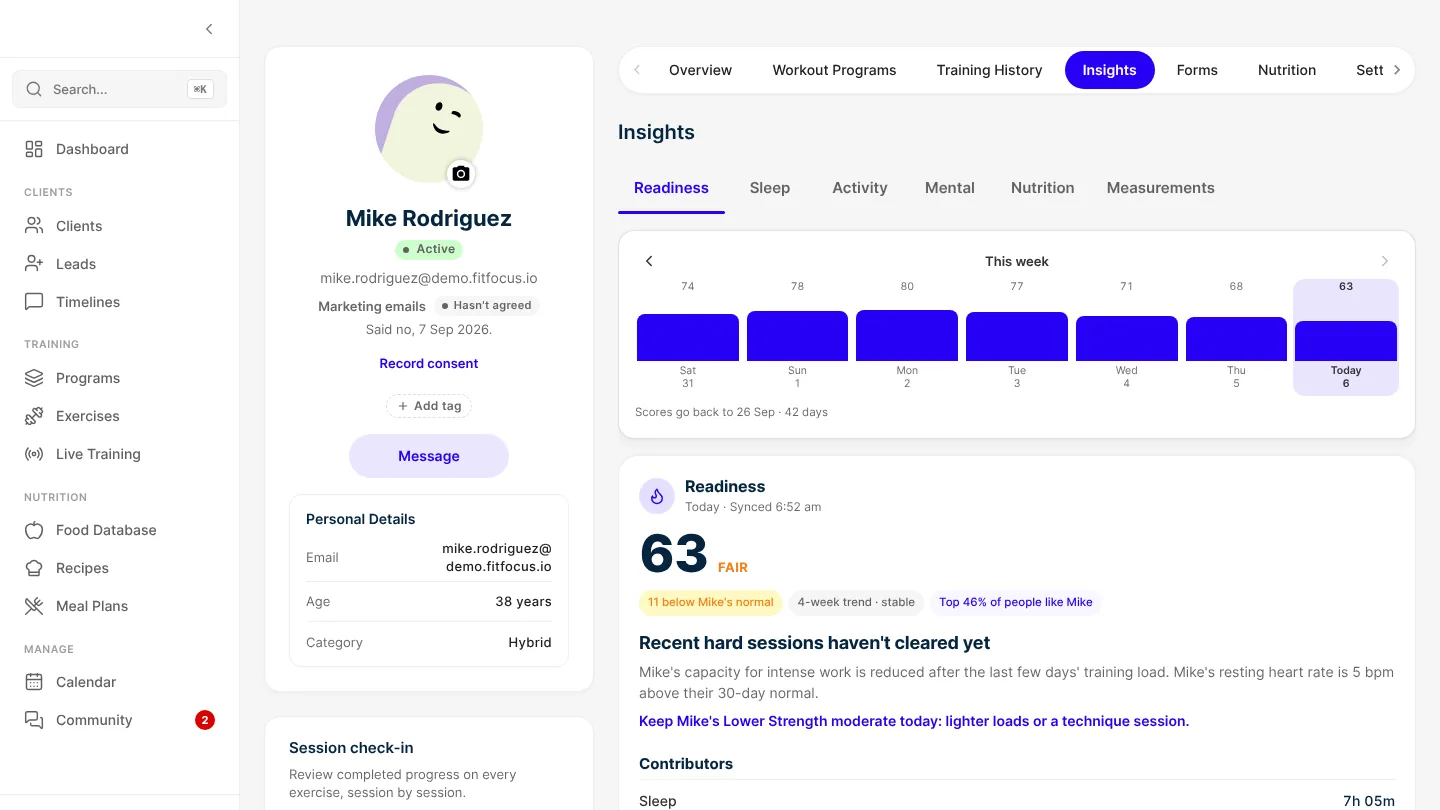
Health Insights now explain every score
Each readiness, sleep, activity and mental wellbeing score now names its cause, shows what's behind it and says what to do today, for clients and their coach.
The Leg Extension Is Coaching's Favourite Exercise. It Earned It.
The machine that gym purists love to mock was the most prescribed single exercise on FitFocus in October 2026. We think it earned the spot, and the knee worry that follows it around is mostly out of date.
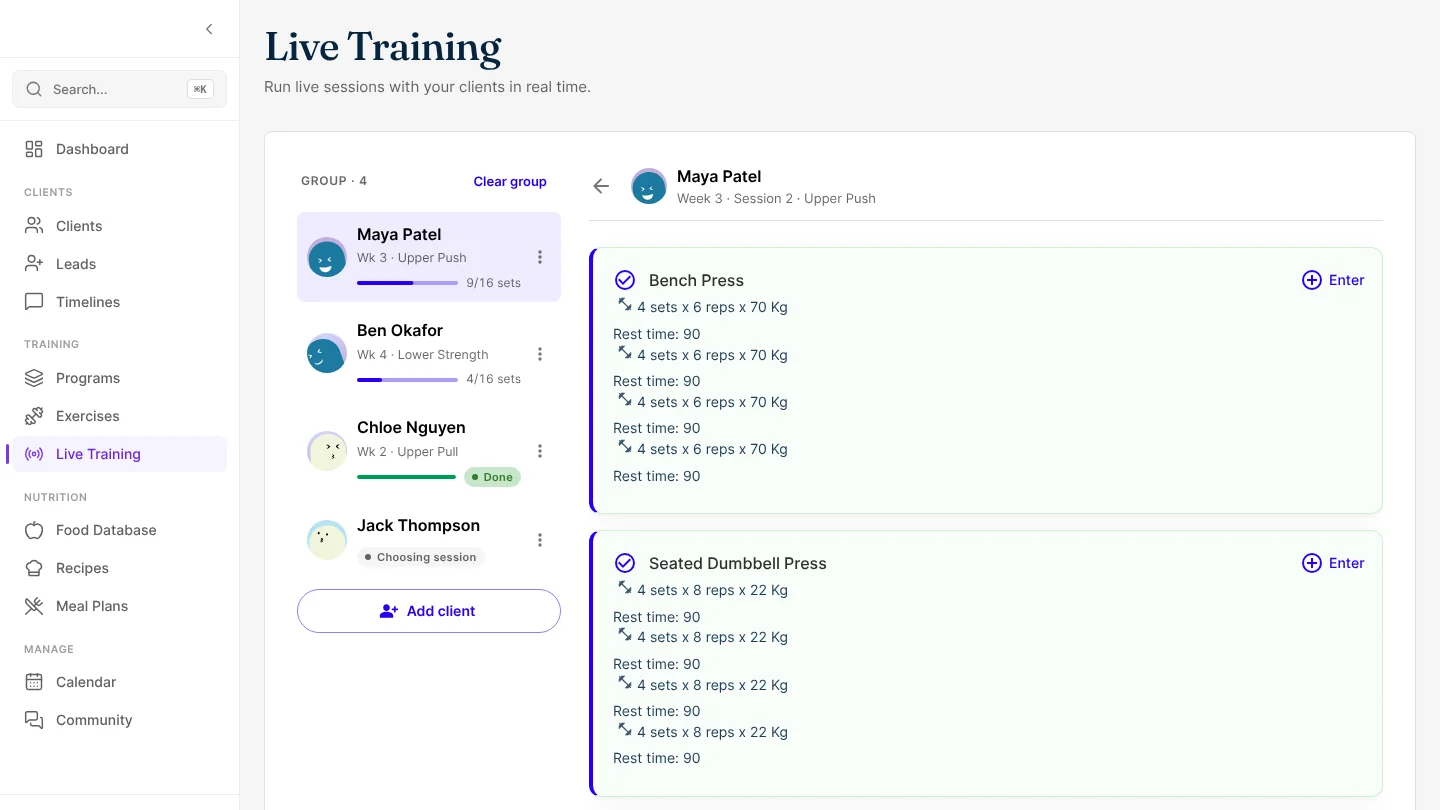
Train your whole group from one screen
Add each client in a small group to one Live Training screen, see how many sets everyone has logged, and switch between them with one tap.